

Last Search Result
The Future of Immersive Content: Exploring 360-Degree Live Stream Technology
20 September 2025
Core Technologies Behind 360-Degree Live Streams
360-Degree Live Stream tech isn’t just a fad, it’s changing how we watch, interact and even learn. At its core this immersive content relies on advanced camera rigs, smart video processing and fast delivery networks.
Each part of the system has to work together or the whole thing falls apart. Smoother streaming and sharper visuals? That’s only possible because of these behind the scenes technologies.
How 360-Degree Cameras Capture Immersive Video
Most 360-degree cameras use a bunch of wide angle lenses, sometimes 8 or more, arranged in a sphere or dual-fisheye setup. Each lens grabs a slice of the scene, overlapping just enough to cover every angle.
Some cameras are small and portable, others are serious pro rigs with 8K resolution and built in stabilization. That extra clarity and stability really matters for live streaming where any hiccup is super obvious to the viewer.
We’re seeing more cameras that work directly with VR headsets and streaming services. That’s a welcome change, less gear to carry around and creators can get set up in minutes not hours.
Real-Time Stitching and Processing for 360-Degree Live Stream
After capturing all that raw footage has to be stitched into one seamless panorama. This “stitching” happens either inside the camera or with external software.
AI driven algorithms are now handling most of the heavy lifting. They fix alignment, balance exposure and smooth out the seams between lenses so the viewer isn’t distracted by weird lines or color shifts.
Machine learning can even predict which direction viewers might look and sharpen those areas in real time. Encoding is also key, codecs like H.265 and AV1 compress the video enough for live distribution, without making it look like a pixelated mess.
It’s a balancing act: you want high quality but can’t overload the network. These advances make it possible to stream immersive video to a global audience without frying everyone’s bandwidth.
Streaming Infrastructure and Content Delivery Networks for Immersive Streams
Pushing out a 360-Degree Live Stream means dealing with much bigger files and higher bitrates than regular video. The network side of things has to be rock solid.
Content Delivery Networks (CDNs) come into play here. They distribute the video through servers worldwide, cutting down on lag and buffering. Some platforms have gotten clever, using tile-based streaming, only the part of the sphere you’re looking at gets sent in high-res, which saves a ton of bandwidth.
5G is making a real difference, too. Faster speeds and lower latency mean mobile viewers can join in without endless loading screens. Cloud-based transcoding is also smoothing out the experience for folks on different devices.
Platforms and Devices for 360-Degree Live Streaming
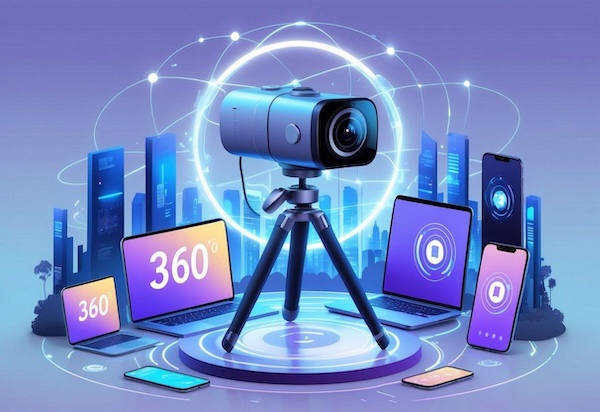
When it comes to 360-Degree Live Stream events, the platform and device you pick can make or break the experience. Choosing the right VR headset is a good place to start, and if you’re curious about trends, check out this overview of immersive trends.
Some platforms offer interactive features, while others focus on stability or reach. Device compatibility is equally important; after all, what’s the point of a great stream if nobody can watch it?
Popular Streaming Platforms Supporting 360-Degree Live Stream Content
YouTube and Facebook Live have both jumped into the immersive video game, letting creators broadcast 360-degree streams to massive audiences. These services work across browsers, mobile apps, and VR headsets, so pretty much anyone can tune in.
Specialized platforms like Dacast and OneStream Live are more focused on business needs, think conferences, product launches, or high-stakes training. They offer adaptive streaming, analytics, and ways to monetize content.
Some, like BytePlus Live, even blend e-commerce with immersive streams. Imagine viewers buying products right from inside a 360-degree broadcast. It’s wild how quickly marketing is catching up with entertainment here.
Device Compatibility and Viewer Accessibility for 360-Degree Live Stream
Not everyone’s got a VR headset, and that’s fine. Most 360-degree streams work on smartphones and tablets, just tilt or swipe to look around. On desktops, you can use your mouse or trackpad.
The real magic happens with dedicated 360 cameras like Insta360 or QooCam 8K. These gadgets are designed to plug right into YouTube Live or Facebook Live, making high-res immersive streaming way more accessible.
Network speed is still a big deal. 5G is finally making it possible to stream high-quality immersive video on the go, but if your connection stinks, you’ll still get lag or blurry video.
Integrating VR and AR Headsets with 360-Degree Live Stream
For the most “you are there” feeling, VR headsets like Meta Quest, HTC Vive, and PlayStation VR are where it’s at. You can just turn your head and explore, no mouse or touchscreen needed.
AR is starting to sneak in, too. Some platforms are experimenting with overlaying 360-degree video onto real-world environments, which could be a game changer for education or real estate.
Compatibility is getting better, thanks to WebXR. Now, lots of headsets can access immersive streams straight from the browser, no more juggling a dozen apps or weird setup steps.
Creating and Producing Immersive Live Experiences with 360-Degree Live Stream
Storytelling Techniques for 360-Degree Video
Forget everything you know about traditional framing. With 360-degree video, you can’t force viewers to look where you want, but you can nudge them with spatial audio, lighting, or movement.
Pacing feels different, too. Quick cuts can be jarring, so longer takes and gentle transitions work better. Directors often use pre-visualization tools in VR to test out scenes before shooting, which helps avoid awkward moments later.
Some productions layer stories within the environment, letting viewers discover different elements as they look around. It’s a neat way to keep people engaged without overwhelming them.
Interactive Features and Audience Engagement in 360-Degree Live Stream
Adding interactive options is a no-brainer. In sports, fans might switch camera angles or pull up instant replays right inside the stream. Concerts often have overlays for setlists or merch, making the experience feel more personal.
Polls, live comments, and clickable hotspots let viewers shape the event itself. Want to focus on a specific performer or unlock bonus footage? That’s all possible now.
But usability matters, a lot. If menus are confusing or controls lag, people will bail. The best immersive streams keep things simple and responsive.
Applications and Industry Use Cases for 360-Degree Live Stream
Live Events and Entertainment
Concerts, sports, and festivals are all jumping on the immersive video bandwagon. Fans can pick their viewpoint in real time, making virtual attendance feel surprisingly real.
Sports leagues use panoramic streaming to offer unique camera angles, like behind the goal or right on the sidelines. This kind of flexibility is helping digital ticket sales soar.
- Wider audience access
- Higher engagement through interactive viewing
- New sponsorship and ad options
Virtual Tours and Remote Experiences with 360-Degree Live Stream
Real estate agents, museums, and tourism boards are all using immersive live video to reach people who can’t be there in person. Museums stream exhibitions for virtual visitors, while real estate agents show properties to buyers anywhere in the world.
Travelers can preview destinations, hotels, and attractions before booking. It’s a great way to build trust and get people excited about travel again.
- Remote property showings
- Virtual museum and gallery visits
- Tourism destination previews
Education and Training Using 360-Degree Live Stream
Schools and companies are finding new ways to make learning stick. Students can attend lectures or labs remotely, feeling like they’re right in the room.
Medical training uses immersive streams to broadcast surgeries from multiple angles, and aviation programs are using it for flight simulations. It’s hands-on learning, minus the travel costs.
- Virtual field trips
- Live surgical training
- Workplace safety exercises
Technical Challenges and Future Innovations in 360-Degree Live Stream
Bandwidth and Latency Solutions for 360-Degree Live Stream
Delivering a true 360-Degree Live Stream is a data-hungry endeavor. Unlike standard video, you’re sending every possible angle at once, which means the bandwidth requirements skyrocket.
Just one 4K panoramic broadcast can chew through 20–50 Mbps of data. If you bump up to 8K, that number climbs even higher, sometimes alarmingly so.
Latency? That’s another beast. Even a couple of seconds’ delay can ruin the magic, especially for interactive events or live sports where timing is everything.
To keep things snappy, developers are leaning into low-latency streaming protocols like WebRTC. They’re also squeezing every bit of efficiency from video codecs such as HEVC (H.265) and AV1.
Edge computing is getting a lot of love lately. By handling video processing closer to the end user, it helps shave off precious milliseconds. CDNs with edge servers step in to cache and distribute those streams, making large-scale panoramic streams more manageable.
Adaptive bitrate streaming deserves a shoutout too. It lets the video shift its quality on the fly, matching whatever the viewer’s network can handle at that moment.
Virtual reality streaming and immersive video production both benefit from these advances, especially when aiming for smooth 360-degree broadcasts.
Advancements in Camera Technology for 360-Degree Live Stream
Camera tech for immersive live streaming has come a long way, thankfully. Gone are the days of awkward, multi-lens contraptions that required hours of post-production just to stitch together a passable video.
Now, compact all-in-one cameras dominate. These rigs use clever stitching algorithms that combine video feeds instantly, so you can actually go live without a headache.
Resolution is a big deal here. Top-tier setups often shoot in 8K or better, which really matters if viewers want to zoom or pan around without things turning into a pixelated mess.
Wide dynamic range and solid low-light performance help keep the visuals crisp, whether you’re filming in a stadium or a dimly lit concert hall.
Some systems rely on multi-lens arrays that overlap their fields of view, cutting down on those annoying blind spots. Others add depth sensors, capturing more spatial data for a richer, more immersive experience.
Hardware stabilization is another game changer. It’s not perfect, but it’s made live event coverage a lot smoother and less nausea-inducing.
Honestly, these upgrades have made panoramic video a real contender for sports, concerts, and even remote learning, places where both image quality and reliability matter a ton.
The Role of AI in 360-Degree Live Stream Experiences
Artificial intelligence is really shaking up how 360-Degree Live Stream content is produced and delivered. It’s not just about fancy tech, AI actually supports several crucial pieces of the puzzle for immersive broadcasts.
One standout area is automated stitching. Here, machine learning algorithms align and blend video from multiple lenses, smoothing out those pesky seams that can ruin immersion.
Then there’s video compression. AI can predict motion, optimize frames, and slash bandwidth needs without trashing the image quality. This is a lifesaver for high-res streams that would otherwise eat up all your data.
When it comes to personalization, artificial intelligence tracks where you’re actually looking. It’ll boost the resolution in that specific area, so viewers get the sharpest view where it matters most. The rest? Lower quality, saving resources without anyone noticing.
In terms of production workflow, AI-driven tools help with camera placement and scene recognition. They even jump in with some real-time editing magic. This means less manual tweaking and more scalable live 360-degree broadcasts for everyone.
Galleries
- Breakfast With Iga
- Top Tit Star
- Jenna yellow
- The warm up
- Sarah Genova
- Sizzling Brunette Carmella In A Bath
- Tera Green Couch
- Alyssa Marie
- Courtney Cass Nice Tits
- Carol pussy picnic
- Bra Burning
- Yummy MILF Cornelia
- Sarenna Big Melons
- Kyra And Viola
- Best Busty Babe Lucy C
- Celeste glass dildo
- Epiphany Tasselbikini
- Sophia Lares
- Mary Helen
- Amy Green